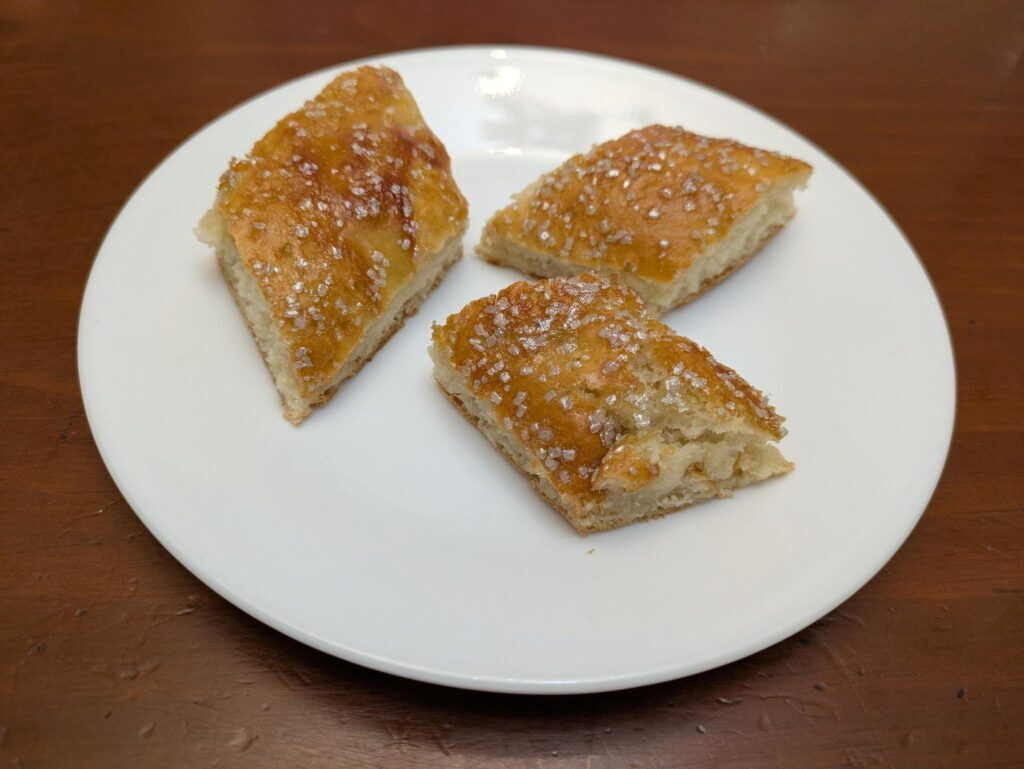
This morning, I had a hankering for scones, so I made a batch. The recipe I use is quite simple.
I almost certainly first heard of scones from reading The Hobbit. I was in fourth grade and I had never seen the word before. I asked my mom, who said she had seen a recipe for them — probably in The Joy of Cooking. I persuaded her to make some for me. We still have her copy somewhere in the house, but I have to admit that I didn’t think very much of them. I probably liked them about as much as Gollum liked lembas bread. It was very disappointing.
Years later, I looked at recipes online — a luxury that didn’t exist in my childhood — and found there were a lot of different examples. The one we had used was similar to biscuits — it used baking powder to get the dough to rise. But I saw that some recipes just suggested using yeast. That sounded better to me. In fact, they looked a lot like the recipe I used for pizza crust. So I experimented a bit and came up with a recipe that works very satisfactorily for me.
Dissolve fast-rising yeast in a half-cup of warm water (or more, depending on how many you want to make). Add a tablespoon or two of sugar and a little salt (1/2 teaspoon or so). Note: this is way more sugar than I would use in pizza dough, but it’s nice if the scones are a little sweet. Mix in flour until you have a ball of dough. Let rise for 30-40 minutes, then butter your hands excessively, and spread the dough out in the bottom of a cast iron skillet. Let rise again for 15-20 minutes. Brush the surface liberally with egg white and sprinkle excessively with sparkle sugar. Bake at 350º until golden brown. Cut diagonally into pieces.
Scones are rather plain, on their own, but are an excellent vehicle for toppings. I like to eat scones with clotted cream or Devonshire cream, although butter will do in a pinch. Honey is particularly good, but jam or jelly are fine.
Just make sure you have a lot of people to help you eat them. They’re pretty dangerous.
